How to Rent a Condo in Bangkok: A Complete Guide for Expats (2026)
Renting a condo in Bangkok can be straightforward, but finding the right unit requires more than choosing an attractive listing. Rental prices, building rules, lease conditions, transportation, and the reliability of the information provided can all affect your experience.
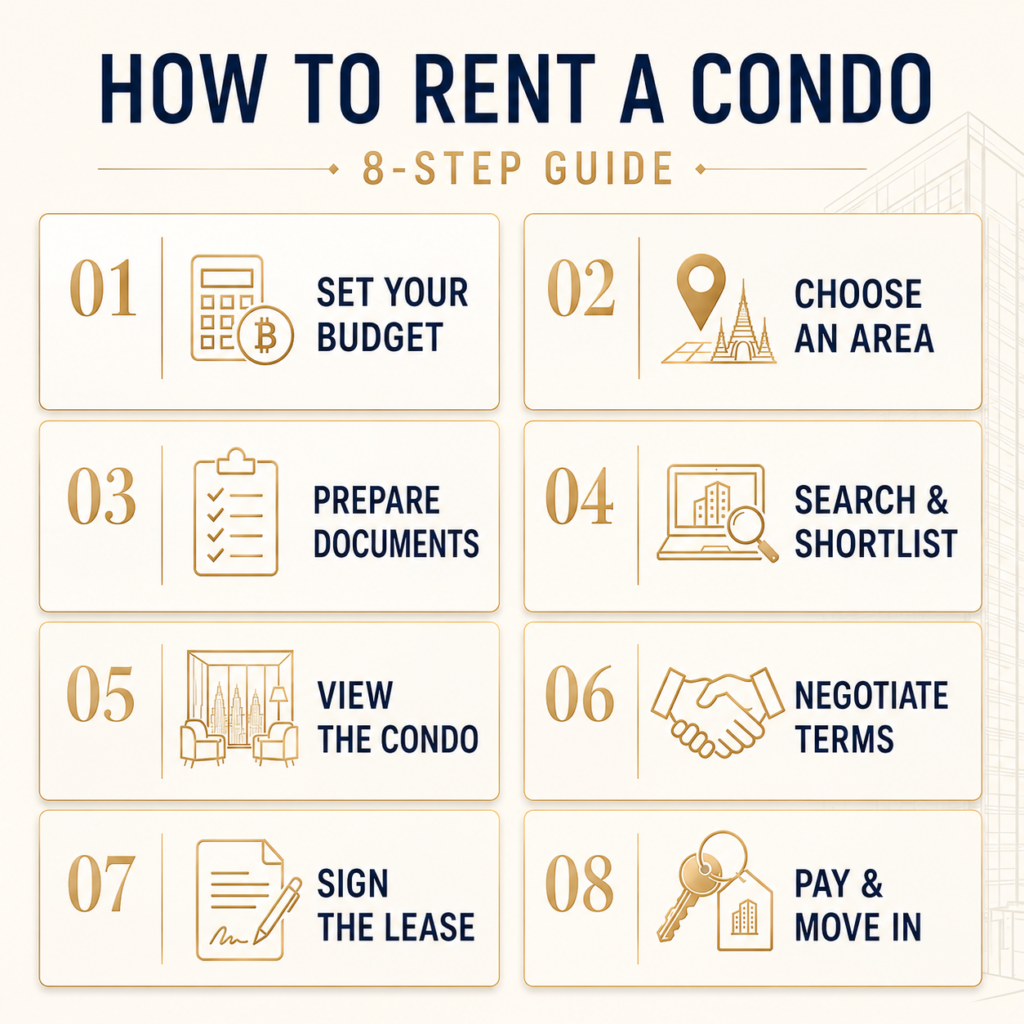
For expats, the process usually begins with setting a realistic budget and choosing a neighborhood that fits your daily commute and lifestyle. You will then shortlist suitable properties, arrange viewings, negotiate the rental terms, review the lease agreement, and prepare the required payments and documents.
Listings in Bangkok can change quickly, and the same condominium may appear online through several agents with different prices or availability. Confirming that a unit is still available before arranging a viewing can save considerable time.
This guide explains how to rent a condo in Bangkok in 2026, including the documents you may need, typical deposits, viewing checks, important lease terms, common mistakes, and practical advice for finding a suitable home.
Quick answer: Foreigners can rent condominiums in Bangkok. A 12-month lease is common, and landlords typically request one month’s rent in advance plus a security deposit. Exact requirements and payment terms should always be confirmed in the written lease agreement.
Can Foreigners Rent a Condo in Bangkok?
Foreigners can legally rent condominiums, apartments, and houses in Bangkok. Renting a property does not involve the same foreign ownership restrictions that apply when purchasing certain types of real estate in Thailand.
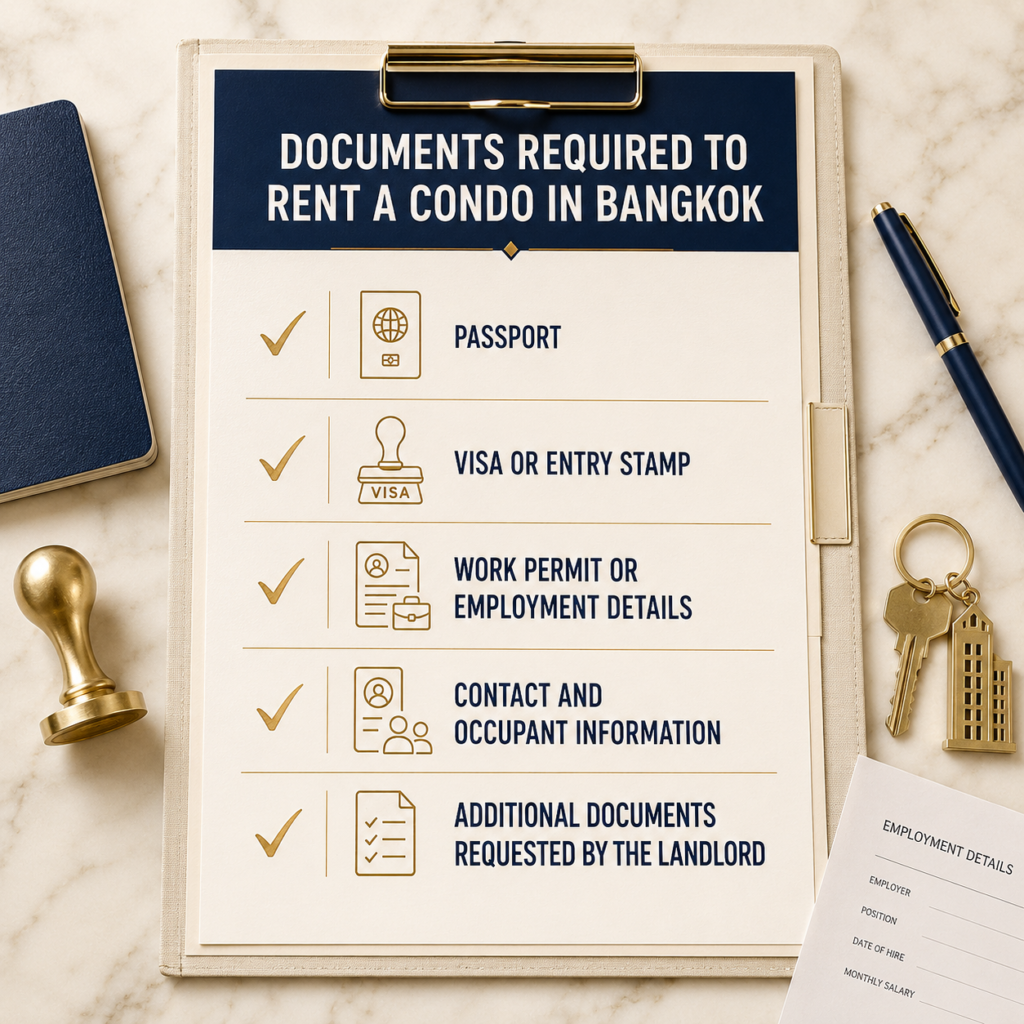
A passport is normally the main identification document required. A landlord or agent may also request a copy of your visa or latest entry stamp, contact details, and information about the people who will occupy the property. Requirements can vary between owners and buildings, so it is best to confirm them before paying a reservation fee or deposit.
A work permit is not universally required to sign a residential lease. However, tenants are still responsible for maintaining an appropriate immigration status for their stay in Thailand. After move-in, the property owner or authorized person may also need to complete the relevant residence notification, commonly known as TM30.
Before signing, make sure the landlord’s name, property details, rental period, payment schedule, deposit conditions, and responsibilities of both parties are clearly stated in the agreement. If any clause is unclear, ask for an explanation or revision before transferring money.
If you are planning a longer-term investment, our guide to buying property in Bangkok explains foreign ownership rules, freehold and leasehold options, costs, and the purchase process.
How to Rent a Condo in Bangkok: Step-by-Step
1. Set Your Monthly Budget
Start by deciding how much you can comfortably spend each month. Rent should not be considered separately from electricity, water, internet, transportation, groceries, and lifestyle expenses.
A lower-priced condo farther from work may increase commuting costs and travel time, while a more expensive unit near BTS or MRT may reduce the need for taxis. You should also reserve enough money for the initial payment required when signing the lease.
When discussing your budget with an agent, state the maximum monthly rent clearly and confirm whether there is any flexibility. This helps avoid viewing properties that are outside your comfortable price range.
For a broader estimate of rent, utilities, food, transportation, and everyday expenses, read the complete cost of living in Bangkok guide.
2. Choose the Right Bangkok Neighborhood
The best neighborhood depends on your workplace, preferred transportation, lifestyle, and household needs. Living close to a BTS or MRT station is convenient, but units within walking distance usually command higher rents.
Asoke offers excellent BTS and MRT connections, while Phrom Phong and Thonglor are popular for premium living, dining, and international amenities. Ekkamai offers a more relaxed residential atmosphere, On Nut provides stronger value along the Sukhumvit Line, and Bang Na is suitable for families or residents who prefer larger homes and convenient airport access.
Before choosing an area, consider the actual door-to-door commute rather than looking only at the distance shown on a map. Bangkok traffic, station access, and the location within each soi can significantly affect daily travel time.
If you are still comparing locations, explore the best areas to live in Bangkok for a broader overview of popular neighborhoods for expats.
3. Prepare Your Property Requirements
Create a clear list of requirements before contacting owners or agents. Include your monthly budget, preferred areas, move-in date, lease length, number of occupants, property type, bedroom requirements, and preferred distance from public transportation.
You should also mention any non-negotiable requirements, such as pet-friendly rules, parking, a bathtub, a washing machine, a separate kitchen, a balcony, a home-office area, or access to international schools.
Separating essential requirements from preferences makes the search more efficient. It also helps an agent recommend realistic alternatives when a unit does not meet every item on your list.
4. Search for Available Condos
You can search through property websites, social media groups, owner listings, and real estate agents. However, online listings are not always updated immediately, and the same unit may appear through several agents at different prices.
Before arranging a viewing, ask whether the unit is still available and request confirmation of the current rent, floor, unit size, furnishings, move-in date, and minimum lease term. If photographs appear inconsistent or unusually edited, request a recent video or additional images.
Working with one responsive agent who understands your requirements can reduce duplicate options and unnecessary messages. A good agent can also shortlist comparable units in the same area when your first choice is no longer available.
5. Arrange Property Viewings
Whenever possible, view the unit in person before transferring money or signing an agreement. Photographs may not reveal traffic noise, construction, odors, natural light, the condition of the furniture, or the actual walking route to public transportation.
Arrange several viewings within the same area on one day so you can compare size, condition, facilities, and value more easily. Take notes or photographs with permission because individual units can become difficult to remember after multiple appointments.
If you cannot attend personally, request a live video viewing rather than relying only on a prerecorded tour. Ask the agent to show the view, appliances, water pressure, storage, common areas, and any existing damage.
6. Negotiate the Rental Terms
Once you find a suitable unit, confirm which terms may be negotiable. Depending on the owner and market conditions, you may be able to discuss the rent, furniture, appliance additions, repairs, cleaning, move-in date, or minor improvements.
Longer leases or a prompt move-in may strengthen your position, but there is no guarantee that an owner will reduce the price. Negotiation should focus on the overall value and condition of the unit rather than requesting a discount without a clear reason.
Put all agreed terms in writing. A verbal promise made during a viewing should be added to the lease agreement or an attached inventory before you transfer the full payment.
7. Review and Sign the Lease Agreement
Read the entire lease agreement before signing. Check the names of the landlord and tenant, property address, unit number, rental period, monthly rent, payment date, deposit amount, utility responsibilities, repair obligations, renewal terms, and early termination conditions.
The agreement should explain how the security deposit will be handled, when it may be deducted, and when the remaining balance should be returned after move-out. It should also state whether pets, smoking, subletting, or business use are prohibited.
Ask for clarification when any wording is unclear. Both parties should receive a signed copy of the final agreement, including any attachments, inventory lists, or additional conditions.
8. Pay the Deposit and Move In
Transfer money only after confirming the payment details and receiving the final agreement or written reservation terms. Keep receipts, bank-transfer records, and copies of all signed documents.
During move-in, inspect the unit carefully and record the condition of walls, floors, furniture, appliances, bathroom fixtures, and existing damage. Take dated photographs or videos and make sure any defects are included in the handover record.
Test the air conditioners, water heater, washing machine, refrigerator, internet connection, access cards, and keys. Record the electricity and water meter readings where applicable. A clear move-in inventory protects both the tenant and landlord when the lease ends.
Documents Required to Rent a Condo in Bangkok
The documents required to rent a condo in Bangkok are generally straightforward. However, individual landlords, condominium buildings, and corporate tenants may have different requirements.
Foreign tenants are commonly asked to provide:
- A copy of their passport
- A copy of their current visa or latest entry stamp
- Contact details in Thailand
- Employer or workplace information, if requested
- Details of any additional occupants
- Emergency contact information
A work permit, employment letter, or proof of income may occasionally be requested, especially for higher-value properties or leases made through a company. However, these documents are not universally required for every residential rental.
Thai tenants are generally asked for a copy of their national identification card and may also need to provide employment or contact information.
Before sending identification documents, confirm who will receive them and why they are needed. Copies should be marked with the purpose of use, such as “For residential lease at [property name] only,” together with the date, to reduce the risk of unauthorized use.
The landlord or agent should also be able to provide information confirming the landlord’s identity and right to lease the property. The name in the lease agreement should correspond with the owner or an authorized representative. If another person is signing for the owner, request evidence of authorization before making the full payment.
How Much Does It Cost to Rent a Condo in Bangkok?
Monthly condo rents in Bangkok vary considerably depending on the neighborhood, distance from BTS or MRT, building age, unit size, condition, furnishings, facilities, and lease length.
As a broad starting point, compact studios and one-bedroom condos in value-oriented areas such as On Nut, Udom Suk, or Bang Na may be available from approximately THB 12,000–20,000 per month. Newer buildings, larger units, and properties located very close to a station may cost more.
In central Sukhumvit areas such as Asoke, Phrom Phong, Thonglor, and Ekkamai, one-bedroom condos commonly begin around THB 25,000 per month and can exceed THB 45,000 depending on the project and unit. Premium and luxury buildings may command THB 50,000 or considerably more per month.
Two-bedroom units generally require a higher budget, particularly in central locations. Larger family condos, pet-friendly residences, serviced apartments, and luxury properties can vary widely in price and should be compared individually.
These figures are illustrative asking-price ranges, not guaranteed market rates. Availability changes frequently, and two units in the same condominium may have different rents because of their floor, view, size, renovation, furniture, and owner expectations.
When setting your budget, remember that the monthly rent is only one part of the total cost. Electricity, water, internet, transportation, parking, cleaning, and other lifestyle expenses should also be considered.
Upfront Costs and Security Deposits
Before moving into a condo in Bangkok, tenants usually need to prepare more than one month’s rent. For many standard 12-month condominium leases, the commonly requested payment is:
- Two months’ rent as a security deposit
- One month’s rent paid in advance
For example, if the monthly rent is THB 25,000, the initial payment may total THB 75,000. This consists of a THB 50,000 security deposit and THB 25,000 for the first month’s rent.
Payment structures can vary according to the landlord, property type, lease length, and any consumer-protection rules applicable to the rental business. Always check the exact amounts and refund conditions stated in the written agreement rather than relying only on messages or verbal explanations.
Some landlords or agents may request a reservation payment to hold the unit while the lease is being prepared. Before transferring this money, obtain written confirmation explaining:
- The amount paid
- How long the property will be reserved
- Whether the payment will be included in the deposit or first month’s rent
- Whether it is refundable
- What happens if either party decides not to proceed
The security deposit is intended to cover matters allowed under the agreement, such as unpaid rent, outstanding bills, missing items, or damage beyond normal wear and tear. The lease should explain when deductions may be made and when the remaining deposit will be returned after move-out.
Do not transfer the full amount until you have confirmed the property, landlord or authorized representative, payment account, and final rental terms. Keep copies of the lease, payment receipts, bank-transfer records, inventory, and move-in photographs throughout the tenancy.

What to Check During a Condo Viewing
A condo viewing should involve more than checking whether the unit looks attractive. Use the viewing to inspect the property, test essential equipment, assess the building, and understand how the location will affect your daily routine.
Check the following before making a decision:
- Unit condition: Look for water stains, mold, cracks, damaged flooring, odors, pests, and signs of previous leaks.
- Appliances: Test the air conditioners, water heater, refrigerator, washing machine, cooking equipment, lights, and electrical outlets.
- Water and drainage: Check the water pressure, hot water, sinks, shower, toilets, and drainage.
- Furniture and storage: Confirm which items will remain and whether anything will be removed, replaced, or added before move-in.
- Noise and natural light: Listen for traffic, construction, neighboring units, and building equipment. Check sunlight, ventilation, heat, and privacy.
- Internet and mobile signal: Test your phone signal and ask which internet providers serve the building, especially if you work from home.
- Facilities and security: Inspect the lobby, lifts, parking, pool, fitness center, access system, parcel area, and visitor procedures.
- Building rules: Confirm policies for pets, parking, additional occupants, moving, smoking, and other requirements relevant to you.
- Transportation: Walk the actual route to BTS, MRT, or your workplace rather than relying only on the distance shown in the listing.
- Surroundings: Check nearby supermarkets, restaurants, hospitals, nightlife, construction sites, and potentially flood-prone streets.
Before transferring money, confirm the unit number, rental price, furnishings, move-in date, lease length, and identity of the landlord or authorized representative.
If you cannot attend in person, request a live video viewing and ask the agent to demonstrate the appliances, water pressure, view, common areas, and any existing damage.
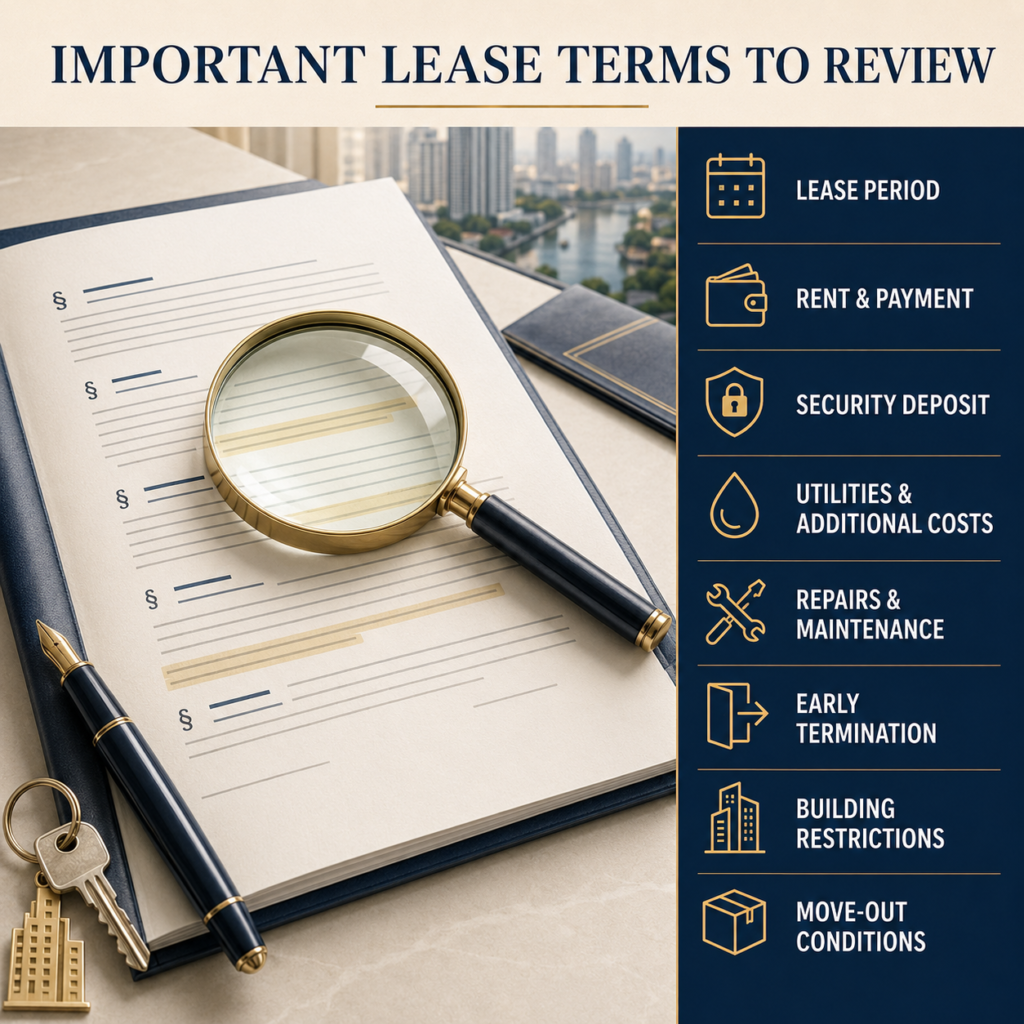
Important Lease Terms to Review
A residential lease is an important legal agreement. Read the complete document and make sure every negotiated condition appears in writing before signing or transferring the full payment.
Review the following terms carefully:
- Names and property details: Confirm the legal names of the landlord and tenant together with the condominium name, building, unit number, and address. If someone signs for the owner, request evidence of authorization.
- Lease period: Check the start date, end date, renewal conditions, and the notice required before moving out or extending the lease.
- Rent and payment: Confirm the monthly rent, due date, payment method, bank account, late-payment conditions, and any services included in the rent.
- Security deposit: Check the deposit amount, permitted deductions, refund process, and how the agreement distinguishes damage from normal wear and tear.
- Utilities and additional costs: Confirm responsibility for electricity, water, internet, parking, cleaning, move-in fees, access cards, and other charges.
- Repairs and maintenance: The agreement should explain which repairs are covered by the landlord and which costs are the tenant’s responsibility.
- Early termination: Review the notice requirements, financial consequences, and what happens to the deposit if you leave before the lease ends.
- Building restrictions: Check the rules concerning pets, smoking, subletting, additional occupants, alterations, and business use.
- Move-out conditions: Confirm the inspection process, cleaning requirements, key and access-card return, final bills, and deposit-return procedure.
- Language and documents: If the lease is provided in more than one language, ask which version controls if the wording differs.
Promises concerning repairs, furniture, cleaning, pets, or special conditions should be included in the lease or a signed attachment. Do not rely only on verbal agreements or messages that are missing from the final contract.
Both parties should receive a signed copy of the lease together with the inventory, property-condition record, and any written amendments. Keep these documents, payment records, and move-in photographs until the tenancy and deposit return are fully completed.

Best Areas to Rent a Condo in Bangkok
Bangkok’s neighborhoods differ in rental prices, transportation, atmosphere, and daily convenience. The right area depends on your workplace, budget, preferred lifestyle, and household needs.
Asoke
Asoke is ideal for tenants who prioritize central-city access and convenient transportation. The connection between BTS Asoke and MRT Sukhumvit provides easy travel to several business districts.
The area offers offices, shopping centers, restaurants, hospitals, and international amenities. However, condos near the interchange generally command higher rents, and the neighborhood can be busy and traffic-heavy.
Phrom Phong
Phrom Phong offers premium condominiums, luxury shopping, international dining, parks, and services catering to expatriate residents. It is popular with professionals, couples, families, and Japanese tenants.
Rental prices are generally high near BTS Phrom Phong. Older buildings and properties deeper inside the sois may provide more space, but tenants should check the daily transportation required.
Thonglor
Thonglor is known for its restaurants, cafés, nightlife, wellness services, and international community. It suits professionals and couples who value a fashionable lifestyle and premium residential surroundings.
Many properties are located farther from BTS Thong Lo than their advertisements suggest. Check whether you will need a shuttle, motorcycle taxi, or private car for everyday travel.
Ekkamai
Ekkamai combines central Sukhumvit access with a quieter residential atmosphere. The area includes modern condos, low-rise buildings, cafés, restaurants, schools, and houses.
It can suit professionals, couples, and small families who want convenient access to Thonglor without living in its busiest areas. Rental prices and transportation needs vary considerably depending on the location within the neighborhood.
On Nut
On Nut is a value-oriented option along the Sukhumvit BTS Line. It offers supermarkets, local markets, restaurants, shopping facilities, and a wide range of modern condominiums.
Rental prices are generally more accessible than in central Sukhumvit, making the area popular with young professionals and first-time expatriate tenants. Properties farther into Sukhumvit 77 may require additional transportation to BTS.
Bang Na
Bang Na can provide newer condominiums, larger living spaces, and better value than central Sukhumvit. It is suitable for families, hybrid workers, airport-related professionals, and residents who regularly travel east of Bangkok.
The area is geographically large, and not every property described as being in Bang Na is close to BTS. Check the exact location, commute, road access, and nearby amenities before deciding.
The best neighborhood should balance rent, commute, convenience, and lifestyle. Compare several units within the same area and test the actual journey to the places you visit most frequently.
Common Mistakes Expats Should Avoid
Avoiding a few common mistakes can reduce the risk of wasted time, unexpected costs, and disputes during a Bangkok condo rental.
- Transferring money too quickly: Verify the property, landlord or authorized representative, receiving account, and written payment conditions before sending a reservation fee or deposit.
- Relying on outdated listings: Ask the owner or agent to confirm the current rent and availability before arranging a viewing.
- Ignoring the actual commute: Test the complete door-to-door journey during your normal travel hours rather than relying only on a map.
- Assuming “near BTS” means walkable: Check the real distance, road crossings, pavements, lighting, and whether the route is practical during hot or rainy weather.
- Skipping the viewing: Inspect the unit in person or request a live video tour that shows the appliances, water pressure, view, common areas, and existing damage.
- Accepting verbal promises: Add agreed repairs, furniture, cleaning, pet permission, and special conditions to the lease or a signed attachment.
- Ignoring building rules: Confirm policies concerning pets, parking, additional occupants, smoking, moving, and business use.
- Failing to document move-in: Record the condition of the unit, furniture, appliances, access cards, keys, and meter readings with dated photographs or videos.
- Overlooking exit conditions: Review the notice period, cleaning requirements, early termination terms, deposit deductions, and refund process.
- Setting unrealistic requirements: Separate essential needs from preferences and remain flexible about building age, unit size, or nearby stations when necessary.
Should You Use a Real Estate Agent?
You are not required to use a real estate agent to rent a condo in Bangkok. Searching independently may suit tenants who speak Thai, understand the rental process, have time to verify listings, and already know their preferred building or neighborhood.
An agent can be helpful when you are relocating from overseas, have limited time, do not speak Thai, need several viewings arranged, or have specialized requirements such as pets, parking, or school access.
A responsive agent can help:
- Shortlist properties based on your requirements
- Confirm current availability
- Coordinate viewings
- Compare units and rental terms
- Communicate with landlords
- Record negotiated conditions
- Coordinate the lease, payments, and move-in
An agent cannot guarantee that every landlord will accept a negotiation request or prevent every future dispute. You should still inspect the property, review the complete lease, verify payment details, and retain copies of all documents.
For many standard Bangkok residential leases, the landlord pays the agent’s commission. Different fees may apply to short-term searches, relocation assignments, or tenant-representation services, so confirm any charges in advance.
Choose an agent who asks about your budget, workplace, move-in date, household, and essential requirements before recommending properties. A reliable agent should provide clear information, explain costs, and allow you enough time to make an informed decision without unnecessary pressure.
Frequently Asked Questions
Can a foreigner legally rent a condo in Bangkok?
Yes. Foreigners can legally rent condos, apartments, and houses in Bangkok. A passport is usually required, and the landlord may request visa details or information about other occupants. Always review the lease before paying.
How much deposit is normally required?
A standard 12-month condo lease often requires two months’ rent as a security deposit plus one month’s rent in advance. The lease should explain deposit deductions and the refund process.
What is the typical lease length?
A 12-month lease is most common for Bangkok condos. Shorter leases may be available but often cost more and have fewer options. Daily or weekly stays may be restricted by building rules and Thai regulations.
Are utilities included in the rent?
Utilities are usually paid separately from the rent. Tenants commonly pay for electricity, water, internet, and other services. Confirm billing methods and included services before signing the lease.
Can I rent a condo with a pet?
Yes, if both the landlord and condominium allow pets. Confirm the building’s pet policy before paying a deposit. Some landlords may require an additional deposit or special cleaning conditions.
Who pays the agent’s commission?
For many standard Bangkok condo rentals, the landlord pays the agent’s commission. However, fees may vary for short-term rentals, relocation services, or tenant-representation arrangements. Confirm all charges in advance.
Find the Right Condo in Bangkok
Finding the right condo in Bangkok depends on your location, budget, move-in date, commute, and household needs.
Share your requirements, and I can help shortlist available condos, arrange viewings, and support communication with landlords or agents. Because Bangkok rental listings change quickly, starting with clear criteria helps you find suitable properties faster.
Whether you are relocating for work, moving with family, or looking for a convenient Bangkok home, I can help make your property search easier.
Tell me what you are looking for, and I will help you begin your Bangkok condo search.