Buying Property in Bangkok as a Foreigner: A Complete 2026 Guide
Buying property in Bangkok can provide a home, a long-term base in Thailand, or an investment in one of Southeast Asia’s most active cities. However, foreign ownership rules, payment procedures, property documents, and transaction costs can differ significantly from those in other countries.
Foreign buyers should understand what they can legally own, confirm the ownership structure before paying a reservation fee, and conduct proper due diligence. The right property should suit not only your budget but also your purpose, preferred neighborhood, expected holding period, and future plans.
This guide explains the essential points to consider when buying property in Bangkok as a foreigner in 2026, including condominium ownership, freehold and leasehold structures, required documents, international fund transfers, due diligence, fees, and the buying process.
The information below is intended as a practical overview rather than legal, tax, or financial advice. Regulations and administrative requirements can change, and individual circumstances differ. Buyers should confirm current requirements with the relevant authorities, bank, qualified lawyer, and Land Office before completing a transaction.
Can Foreigners Buy Property in Bangkok?
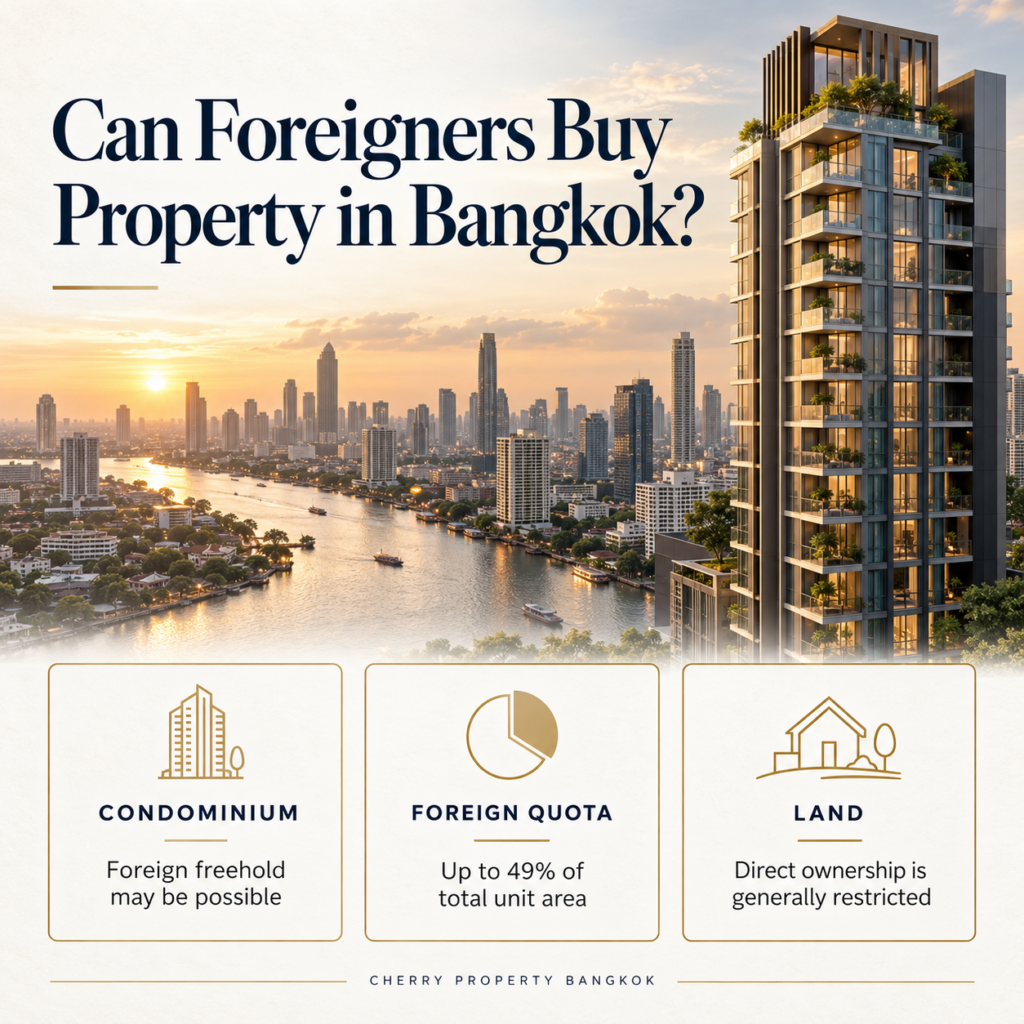
Yes, foreigners can legally buy certain types of property in Bangkok. Condominiums registered under Thai condominium law are generally the most straightforward option because eligible foreign buyers may hold freehold ownership of an individual unit in their own name.
Foreign ownership in a condominium project must remain within the permitted foreign quota. According to Thailand’s Board of Investment, foreign ownership cannot exceed 49% of the total floor area of all units in a condominium project.
This means that a condominium unit may be suitable in every other respect but still be unavailable for foreign freehold ownership if the building’s foreign quota has already been filled. Buyers should request written confirmation of the available quota from the condominium juristic person before signing the final agreement.
Foreign ownership of land is considerably more restricted. A foreign buyer generally cannot purchase land directly in their own name unless a specific legal exception applies. These exceptions are limited and should not be treated as standard solutions for residential buyers.
Foreigners considering houses, villas, or other land-based properties may encounter leasehold arrangements or structures in which ownership of the building and rights to the land are treated separately. These arrangements can be more complex than buying a condominium and require independent legal advice.
A buyer should never use nominee shareholders or an artificial company structure simply to avoid foreign ownership restrictions. Any proposed ownership structure must have a legitimate legal and commercial basis.
Freehold and Leasehold Property in Bangkok
Understanding the difference between freehold and leasehold is one of the first steps in buying property in Bangkok.
Freehold Ownership
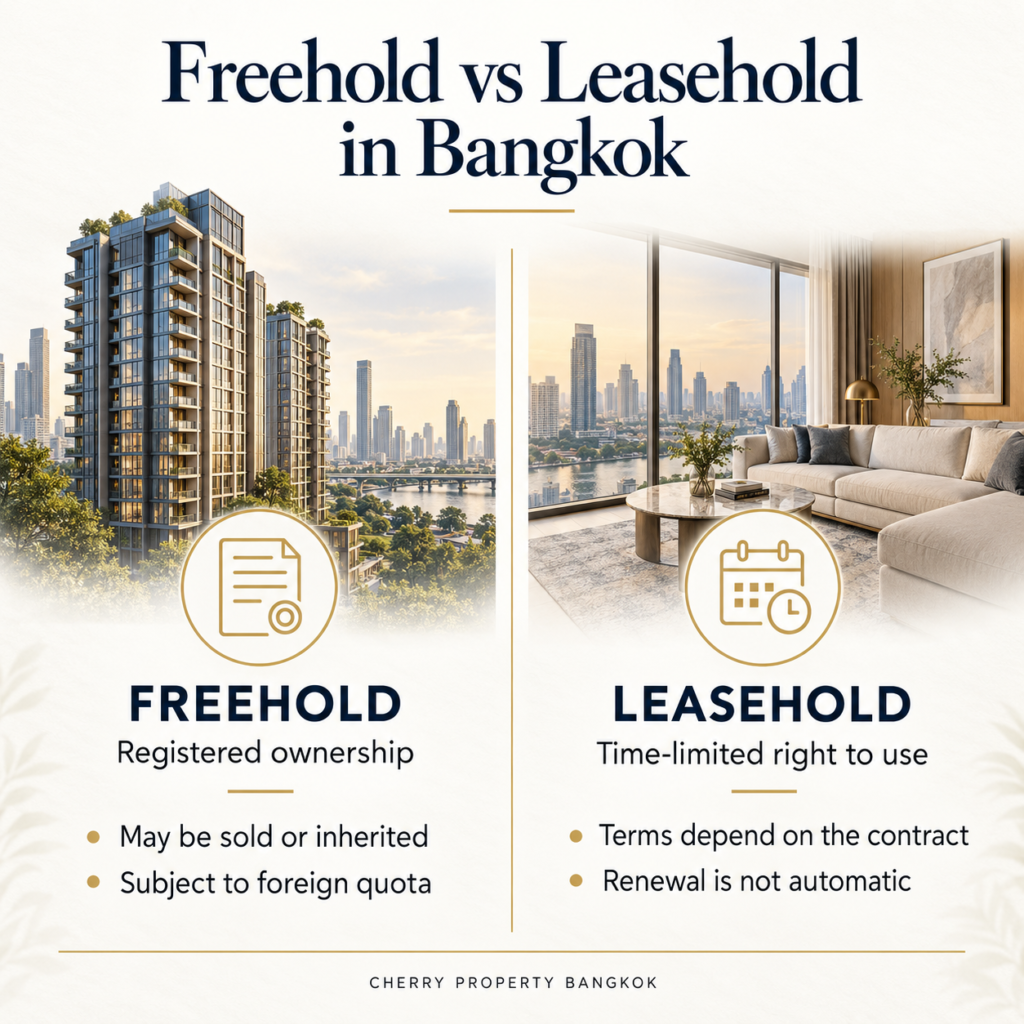
Freehold ownership gives the registered owner permanent ownership of the condominium unit, subject to Thai law and the rules of the condominium.
A foreign freehold owner can normally sell, transfer, lease, or pass the unit to heirs, although each future transaction must comply with the applicable regulations and procedures.
The owner also holds an interest in the common property of the condominium, such as the lobby, lifts, corridors, swimming pool, fitness center, and underlying land, according to the ownership ratio stated in the title documents.
Before buying a freehold condominium, confirm:
- The project is legally registered as a condominium
- The unit has an individual condominium title deed
- Foreign quota is available
- The seller is the registered owner
- The unit is free from undisclosed mortgages or other encumbrances
- The condominium juristic person can issue the documents required for transfer
Leasehold Ownership
A leasehold arrangement gives the buyer or tenant the contractual right to occupy and use a property for a defined period. It does not provide the same permanent ownership rights as freehold title.
Leasehold structures are sometimes used for condominiums when foreign quota is unavailable and for houses or villas located on land that a foreigner cannot own directly.
The lease term, registration, renewal language, transfer rights, inheritance provisions, maintenance obligations, and termination conditions should be reviewed carefully. A promise of a future renewal should not automatically be treated as equivalent to guaranteed long-term ownership.
Because leasehold arrangements can vary considerably, buyers should have the complete agreement reviewed by an independent lawyer before paying a substantial amount.
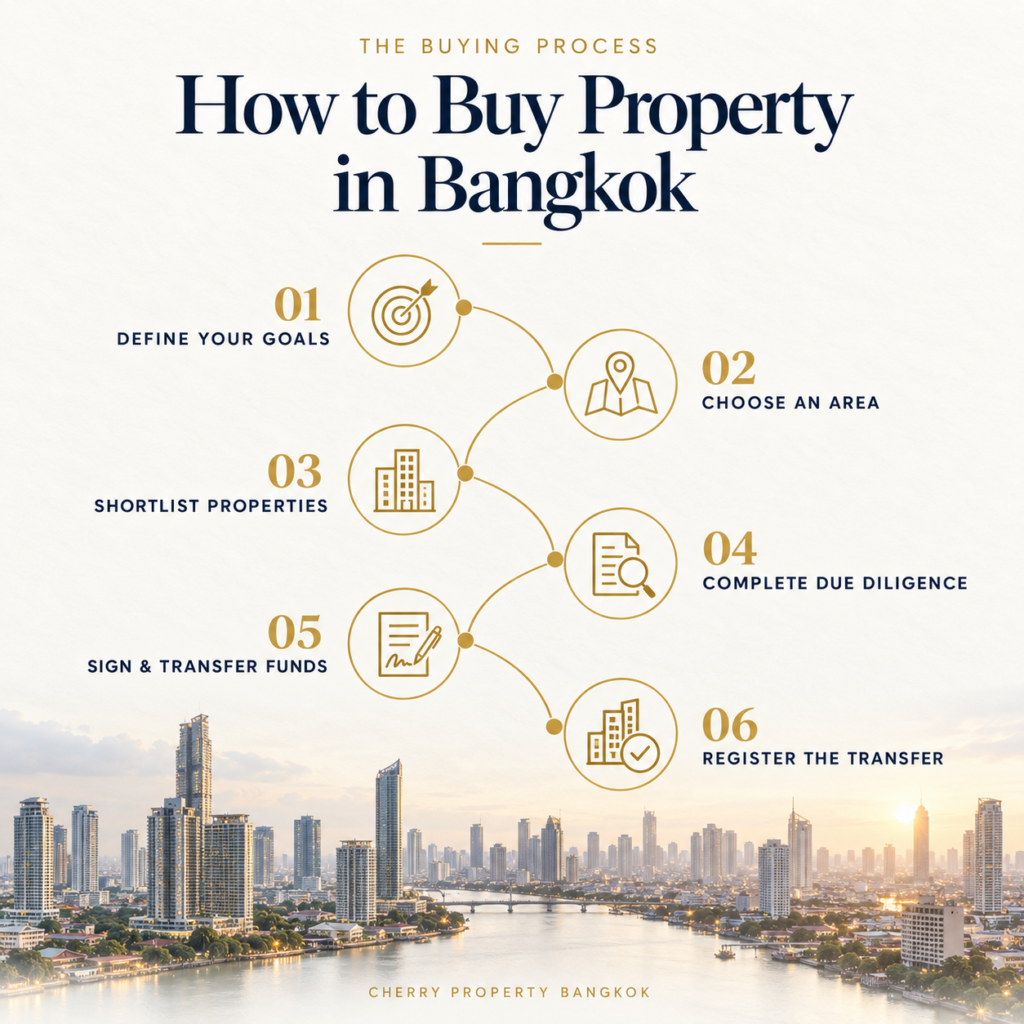
How to Buy Property in Bangkok: Step by Step
Define Your Purpose and Budget
Begin by deciding whether the property will be your primary home, second home, family residence, or investment.
Calculate more than the advertised selling price. Your budget should also allow for:
- Reservation and deposit payments
- Transfer-related expenses
- Legal and due-diligence costs
- Bank and international transfer charges
- Furniture and appliances
- Repairs or renovation
- Common-area fees
- Sinking-fund contributions where applicable
- Insurance and ongoing maintenance
Keep an emergency reserve rather than using your entire available budget for the purchase.
Choose the Right Bangkok Neighborhood
The best area depends on your workplace, lifestyle, transportation needs, family situation, and investment objectives.
Central Sukhumvit neighborhoods such as Asoke, Phrom Phong, and Thonglor offer excellent transportation, international amenities, and premium condominiums. Ekkamai combines central access with a more residential atmosphere.
On Nut can provide better value while remaining connected to central Bangkok by BTS. Bang Na may suit buyers seeking newer developments, more space, road access, and convenient travel toward eastern Bangkok.
Visit shortlisted neighborhoods at different times of day. Test the real journey to work, schools, hospitals, and places you visit regularly. A property described as being near BTS may still require a long walk, shuttle, or motorcycle taxi.
For a broader comparison, explore the Bangkok neighborhood guides before choosing your preferred location.
Decide Between a New Development and Resale Property
New developments may offer modern facilities, promotional payment plans, new building systems, and a wider choice of units during the launch period. However, buyers should evaluate the developer’s track record, construction progress, expected completion date, contract protections, and whether the finished property is likely to match the marketing materials.
Resale properties allow buyers to inspect the actual unit, view, building condition, facilities, and surrounding area. Older buildings may provide larger floor plans and established management, but buyers should examine maintenance standards and potential future repair costs.
Compare properties based on usable space, condition, location, management, and total cost rather than price per square meter alone.
Search and Shortlist Suitable Properties
Provide clear requirements when working with an agent:
- Maximum budget
- Preferred neighborhoods
- Property type
- Minimum usable area
- Number of bedrooms and bathrooms
- Required parking
- Distance from BTS or MRT
- Pet requirements
- Intended use
- Preferred transfer timeline
- Foreign freehold requirement
Bangkok listings can remain online after a property has been sold or withdrawn. Ask the agent or seller to reconfirm availability, price, ownership type, and foreign quota before arranging a viewing.
Inspect the Property and Building
A viewing should assess more than interior decoration.
Inspect:
- Water stains, mold, cracks, odors, and signs of leaks
- Flooring, walls, ceilings, doors, and windows
- Air conditioners and major appliances
- Water pressure, hot water, drainage, and sanitary fixtures
- Electrical outlets, lighting, and the electrical panel
- Furniture and items included in the sale
- Natural light, heat, ventilation, view, and privacy
- Traffic, construction, neighboring units, and building equipment
- Mobile reception and available internet providers
- Parking, lifts, security, parcel handling, and common facilities
Visit the surrounding streets and inspect the actual walking route to public transportation. Ask about future construction nearby, flooding history, building rules, renovation restrictions, and short-term rental policies.
Confirm Foreign Ownership Eligibility
Before paying a non-refundable amount, confirm that the unit can be transferred under the ownership structure you require.
For foreign freehold, request confirmation that:
- The unit is within the available foreign quota
- The condominium is legally registered
- The seller can transfer valid title
- The juristic person can provide a foreign-quota confirmation letter
- The buyer can satisfy the fund-transfer and documentation requirements
Do not rely only on statements made in an advertisement or during a viewing.
Negotiate and Reserve the Property
Once the unit and preliminary ownership checks are satisfactory, the parties may negotiate the price, payment schedule, transfer date, included furniture, repairs, taxes, fees, and other conditions.
A reservation document should clearly identify:
- Buyer and seller
- Condominium and unit number
- Agreed price
- Reservation amount
- Payment deadlines
- Transfer deadline
- Conditions for refund or forfeiture
- Items included in the sale
- Conditions that must be satisfied before completion
Avoid transferring money to an unrelated personal account. Verify the receiving party, bank account, and written payment conditions before sending funds.
Conduct Legal Due Diligence
Independent due diligence should be completed before the buyer becomes fully committed.
A lawyer may review:
- Seller’s identity and authority
- Condominium title deed
- Ownership history
- Registered mortgages and encumbrances
- Sale and purchase agreement
- Foreign ownership quota
- Building permits and condominium registration
- Outstanding common-area fees
- Pending disputes affecting the unit
- Tax and fee allocation
- Required corporate documents if a company is involved
- Spousal consent or other supporting documents where applicable
For an off-plan purchase, due diligence should also cover the developer, land title, construction authorization, project registration, payment schedule, completion protections, and remedies for delay or material changes.
The buyer’s lawyer should be independent from the seller and developer.
Sign the Sale and Purchase Agreement
The final agreement should include every material condition negotiated by the parties.
Review:
- Property details and ownership structure
- Purchase price and payment schedule
- Deposit treatment
- Transfer date and location
- Foreign quota requirements
- Required documents
- Furniture and inventory
- Property condition
- Repairs promised by the seller
- Responsibility for fees and taxes
- Consequences of default
- Refund conditions
- Handover arrangements
If the agreement is bilingual, confirm which language controls if the versions differ. Never rely only on verbal promises that are missing from the signed contract.
Transfer Funds Correctly
Foreign buyers using overseas funds for a condominium purchase should speak with the receiving Thai bank before transferring money.
Thailand’s foreign-exchange transactions must be conducted through authorized financial institutions or other licensed providers. The buyer may need bank-issued evidence showing the origin, currency, purpose, sender, beneficiary, and conversion of the funds.
Ask the bank to confirm:
- How the sender and beneficiary names should appear
- What payment purpose should be written
- Whether funds must arrive in foreign currency
- Which supporting documents will be issued
- What the Land Office will require
- How multiple transfers should be documented
Do not assume that an ordinary domestic transfer will provide the correct evidence for foreign freehold registration. Requirements should be confirmed before the money is sent, not after it arrives.
For official information on foreign-exchange transactions, consult the Bank of Thailand’s exchange-control guidance.
Complete the Transfer at the Land Office
On the agreed date, the buyer and seller—or their properly authorized representatives—complete the ownership transfer at the relevant Land Office.
The authorities review the transaction documents, collect the applicable fees and taxes, and register the buyer as the new owner.
The buyer should receive and retain:
- Updated condominium title deed
- Official sale and transfer documents
- Land Office receipts
- Signed agreement
- Proof of payment
- Foreign-exchange evidence
- Juristic-person certificates
- Inventory and handover record
- Copies of identification and authorization documents
Confirm the final allocation of transfer expenses before the appointment. The amount payable can depend on the property, seller, assessed value, holding period, and current government measures.
Inspect and Take Possession
Before accepting the unit, complete a final inspection and confirm that its condition matches the agreement.
Record:
- Keys and access cards
- Furniture and appliances
- Existing damage
- Electricity and water meter readings
- Parking rights
- Manuals and warranties
- Outstanding repairs
- Juristic-person registration
- Utility account changes
Photograph or film the condition of the property and retain the signed handover record.
Documents Foreign Buyers May Need
Requirements vary by transaction, bank, ownership structure, and Land Office. Common documents may include:
- Passport
- Valid immigration or entry documentation
- Signed reservation agreement
- Sale and purchase agreement
- Proof of address
- Marriage documents where relevant
- Power of attorney if a party cannot attend
- Bank transfer confirmations
- Foreign-exchange documentation
- Proof of payment
- Certified translations when required
The seller commonly provides the title deed, identification documents, house-registration documents where relevant, spouse consent if required, juristic-person certificates, foreign-quota confirmation, and evidence that common fees have been paid.
Ask the lawyer, bank, and Land Office for a transaction-specific checklist.
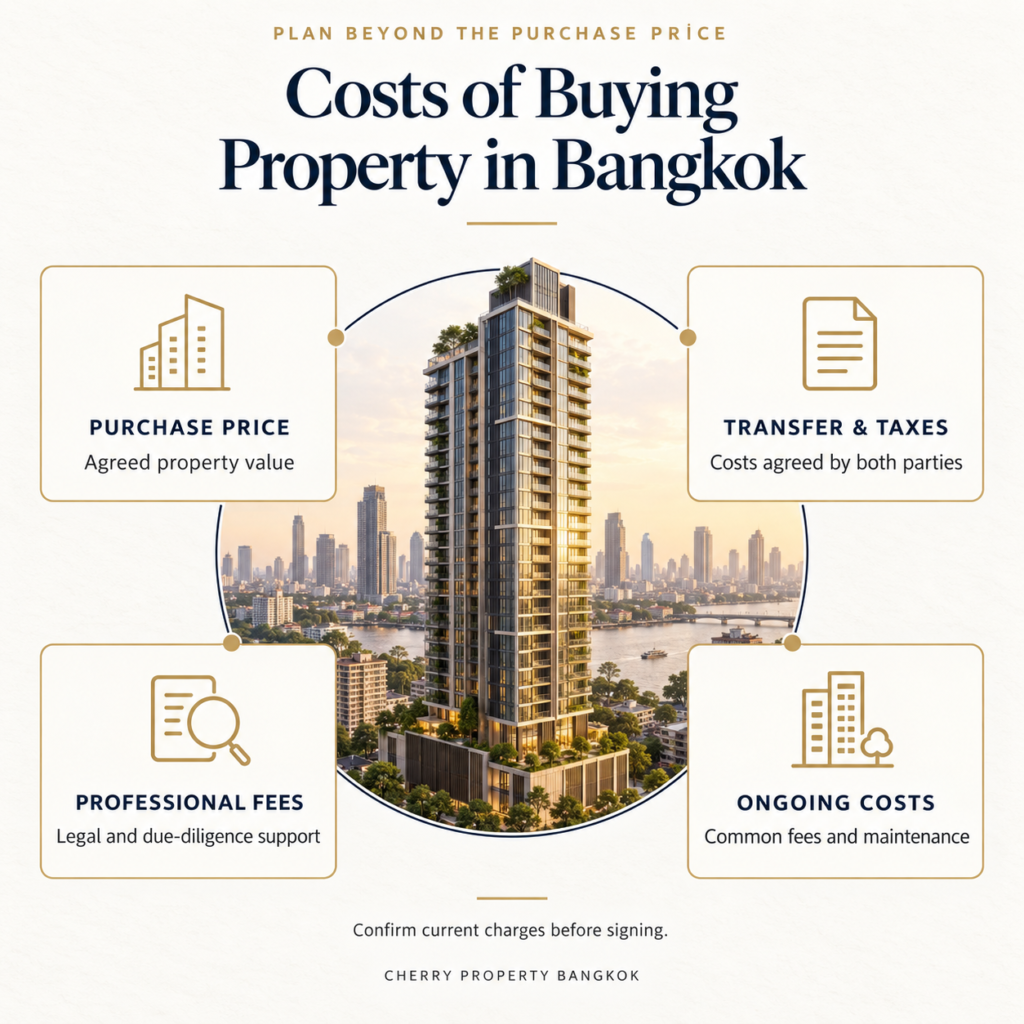
Costs of Buying Property in Bangkok
The purchase price is only one part of the total cost.
Possible expenses include:
- Transfer fee
- Withholding tax
- Specific business tax or stamp duty, depending on the transaction
- Legal fees
- Due-diligence fees
- Bank and currency-conversion charges
- Mortgage registration costs if financing is used
- Common-area fees
- Sinking-fund contribution
- Insurance
- Repairs, renovation, and furnishing
The legal responsibility for a tax or fee and the commercial agreement about who ultimately pays it are not always the same. The sale contract should state the agreed allocation clearly.
Tax rates and temporary transfer-fee measures can change. Confirm the current calculation with the Land Office, Revenue Department, and qualified adviser shortly before transfer rather than relying on an old online estimate.
Can Foreigners Get a Mortgage in Thailand?
Financing may be available to some foreign buyers, but options are more limited than for Thai citizens.
Eligibility can depend on:
- Nationality and residency status
- Thai income and employment
- Work permit
- Credit history
- Age
- Property type and value
- Down payment
- Bank policy
- Relationship with the lender
Some buyers use overseas financing or purchase with cash. Obtain written financing approval before signing an agreement that places a large deposit at risk.
Compare interest rates, currency exposure, early-repayment conditions, insurance, valuation fees, and mortgage-registration expenses.
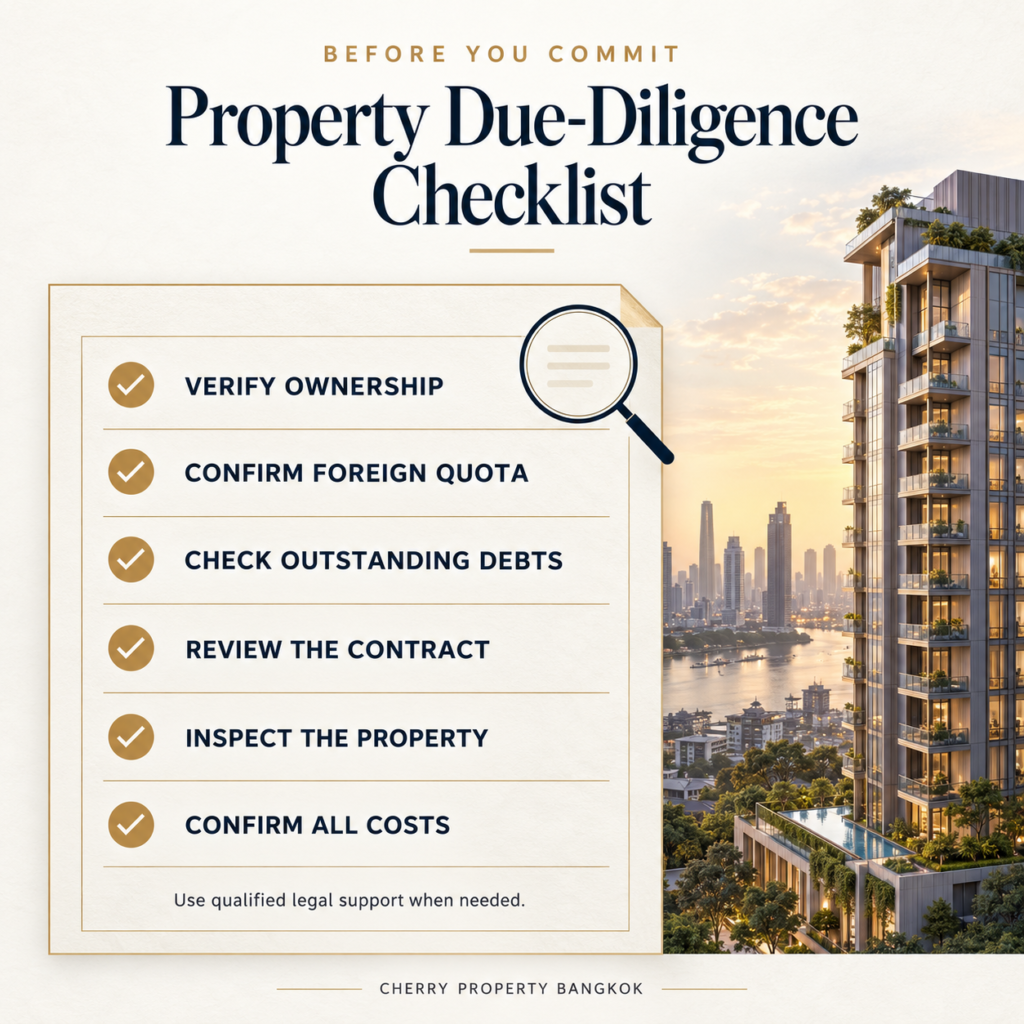
Due-Diligence Checklist
Before completing a purchase, confirm:
- The seller is the registered owner
- The title deed matches the property
- Foreign quota is available if required
- No undisclosed mortgage or encumbrance exists
- Common fees and utilities are settled
- The building is properly registered
- The unit complies with approved plans
- The contract reflects every negotiated condition
- International funds are documented correctly
- Transfer costs are calculated and allocated
- Furniture and repairs are listed in writing
- The final inspection is completed
If any important document or explanation is missing, pause the transaction until it is clarified.
Common Mistakes Foreign Buyers Should Avoid
Paying Before Verifying Ownership
Do not send a reservation fee simply because a listing appears attractive. Verify the unit, seller, receiving account, ownership structure, and written refund conditions first.
Assuming Every Condo Qualifies for Foreign Freehold
Foreign quota must be available in the specific condominium. Confirm it before committing to the purchase.
Using the Wrong Transfer Method
Transferring funds without speaking to the receiving bank can create documentation problems. Confirm the correct currency, purpose, names, and required evidence in advance.
Skipping Independent Due Diligence
An agent can coordinate the transaction but should not replace independent legal review. Buyers need a lawyer to examine ownership, contracts, and legal risks.
Choosing Only by Price
A low price may reflect poor management, high common fees, difficult access, building problems, an undesirable view, or limited resale demand.
Treating Leasehold Like Freehold
A lease is a time-limited contractual right. Review its term, registration, renewal, transfer, inheritance, and termination provisions carefully.
Ignoring Ongoing Costs
Common fees, repairs, insurance, furnishing, taxes, and periods without a tenant can materially affect the true cost of ownership.
Expecting Guaranteed Rental Returns
Rental income depends on location, building quality, unit condition, market supply, tenant demand, management, and operating expenses. Marketing projections are not guarantees.
Should You Use a Bangkok Real Estate Agent?
A buyer can search independently, but an experienced agent can help organize the process and reduce wasted time.
An agent can assist with:
- Defining realistic requirements
- Shortlisting suitable properties
- Confirming availability
- Coordinating viewings
- Comparing buildings and neighborhoods
- Communicating with sellers
- Negotiating commercial terms
- Coordinating documents and transfer appointments
- Recommending independent lawyers and other specialists
An agent should explain what is known, identify what still requires verification, and avoid pressuring the buyer to transfer money prematurely.
The buyer should still review all documents, obtain independent legal advice, verify payment details, and make the final decision personally.
Frequently Asked Questions
Can a foreigner legally own a condominium in Bangkok?
Yes. An eligible foreign buyer can generally hold freehold ownership of a condominium unit if the project is legally registered, foreign quota is available, and the buyer satisfies the applicable ownership, payment, and documentation requirements.
Can a foreigner buy land in Bangkok?
Foreign ownership of land is generally restricted. Limited legal exceptions may exist, but they are not standard residential purchasing routes. Obtain independent legal advice before considering any land-based ownership structure.
What is the foreign ownership quota?
Foreign ownership in a condominium project cannot exceed the legally permitted proportion of the total unit floor area. Availability must be confirmed for the specific building before purchase.
Is freehold better than leasehold?
Freehold provides permanent registered ownership, while leasehold provides a contractual right for a defined period. The better option depends on the property and buyer’s objectives, but the two structures should not be treated as equivalent.
Do I need a Thai bank account?
A Thai bank account can make payments and ongoing property expenses easier, but the exact requirements depend on the transaction and bank. Foreign buyers should confirm the correct international transfer process before sending purchase funds.
Do I need a lawyer?
Legal representation is not merely a formality. Independent legal review is strongly recommended, particularly for title checks, contracts, foreign ownership eligibility, off-plan purchases, leasehold arrangements, and complex ownership structures.
Can I buy property without visiting Bangkok?
A transaction may sometimes be completed through properly prepared powers of attorney and authorized representatives. However, the buyer should arrange independent inspections, legal review, secure document handling, and careful verification of every payment.
Can I rent out a condominium after buying it?
Many owners rent their units on a residential basis, subject to the law, condominium rules, lease terms, tax obligations, and building policies. Do not assume that daily or short-term rentals are permitted.
Find the Right Property in Bangkok
Buying property in Bangkok requires more than finding an attractive listing. The right decision should balance ownership eligibility, location, building quality, total cost, legal verification, and long-term suitability.
Tell me your budget, preferred neighborhoods, intended use, timeline, and essential requirements. I can help you compare suitable Bangkok properties, arrange viewings, communicate with sellers, and coordinate the next steps with the relevant professionals.